

The Alznner is one of the original supports we offered our very first customers. Its inventor was a podiatrist who patented the support in 1969, hoping to help improve the lives of all of the people who put it on.
Flexibility: Medium-Flexible
Sturdy enough to take a beating every day in your work boots, the Alznner is still flexible enough to accommodate a wide variety of foot types and activities. The Alznner’s flexibility and features make it ideal for arches of average height and flexibility.
What’s in an Alznner?
“Stability Structure”
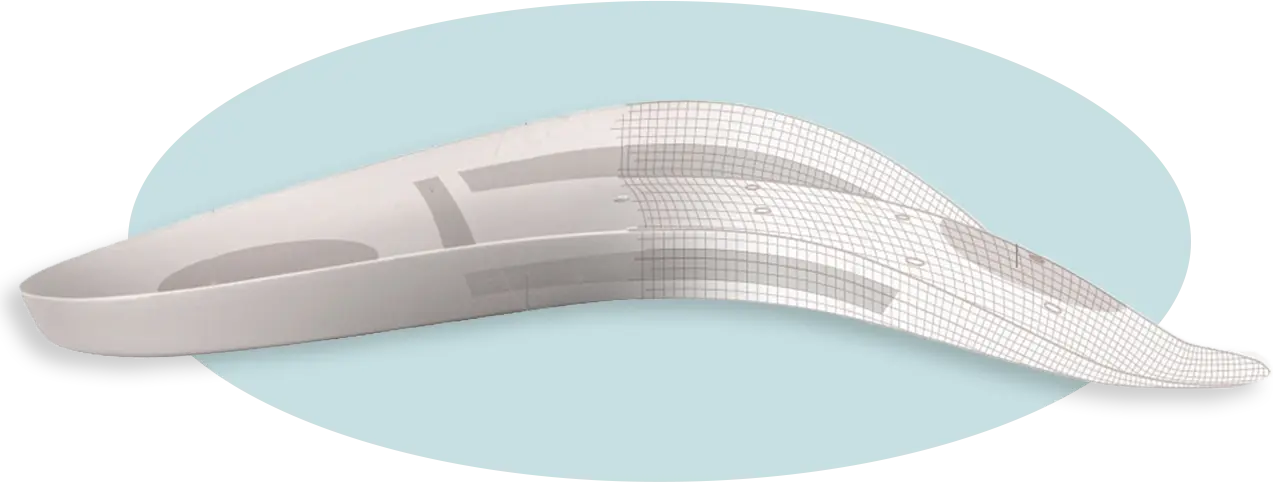
The underside of the Alznner features a sturdy pattern of connected squares, which we call a “Stability Structure.” These thick squares are positioned under the forefoot of the support, to help stabilize the support while the foot walks.
What Does It Do, And How Can It Help?
The Alznner’s square Stability Structure helps to prevent unnecessary side-to-side motion of the foot during gait. This stable pattern helps the Alznner retain its arched shape no matter how hard the foot depresses it, ensuring that the many bones of the forefoot are properly supported. This leads to a more stabilized, and better aligned, foot.
Metatarsal Rise
The “toes” end of the Alznner features what looks like a miniature pitcher’s mound. This is called the “metatarsal rise,” and it is particularly effective at taking pressure off the ball of the foot, the toes, and the heel.
What Does It Do, And How Can It Help?
By properly supporting the metatarsal arch, the metatarsal rise lifts up the bones in the ball of the foot, effectively preventing them from hitting the ground too hard every time the foot pushes off for a step. This means that the metatarsal rise in the Alznner can help relieve some pain caused by pressure in the ball of the foot, and also distribute body weight away from corns, calluses, and other painful problems in the ball of the foot.
As it takes pressure off the ball of the foot, the metatarsal rise in the Alznner also fans out the bones that form the arch, and the top of the foot. At the same time, the toes are relieved of lots of pressure. This is why the Alznner can help prevent the toes from gripping the ground with each step, which could be the cause of hammertoes, calluses or corns.
While properly distributing pressure through the front end of the foot, the Alznner’s metatarsal rise also re-distributes pressure through the whole bottom of the foot, which may reduce strain on the plantar fascia ligament (a band of tissue that runs from the bottom of the heel to the ball of the foot). When the plantar fascia ligament is allowed to stretch under too much pressure, it can become inflamed, causing a condition called “Plantar Fasciitis.” Because the Alznner’s metatarsal rise is so effective at properly distributing body weight through the foot, it can greatly reduce strain on the plantar fascia ligament.
Heel Cup
The heel cup is a cup-like indentation at the heel end of the Alznner. It is designed to gather the fat pad beneath the heel, to help absorb the “step shock” that courses through the body every time each heel strikes the ground.
What Does It Do, And How Can It Help?
Every step each foot takes begins when the heel makes contact with the ground, in what is called “heel strike.” When the heel strikes the ground, up to three times the body’s weight can be exerted on the bones and tissues of the heel. This puts the heel under tons of stress, especially if it is not properly supported. The Alznner’s heel cup is designed to help cushion and properly align the heel, thereby reducing the stress of each step.
A stable heel is the foundation of a stable body. If a heel is striking the ground at an angle, or rolling too much to one side during gait, it can cause imbalances throughout the entire foot, ankle, knees, and eventually through the entire body. By supporting the heel, the Alznner can help align each step, starting with heel strike.
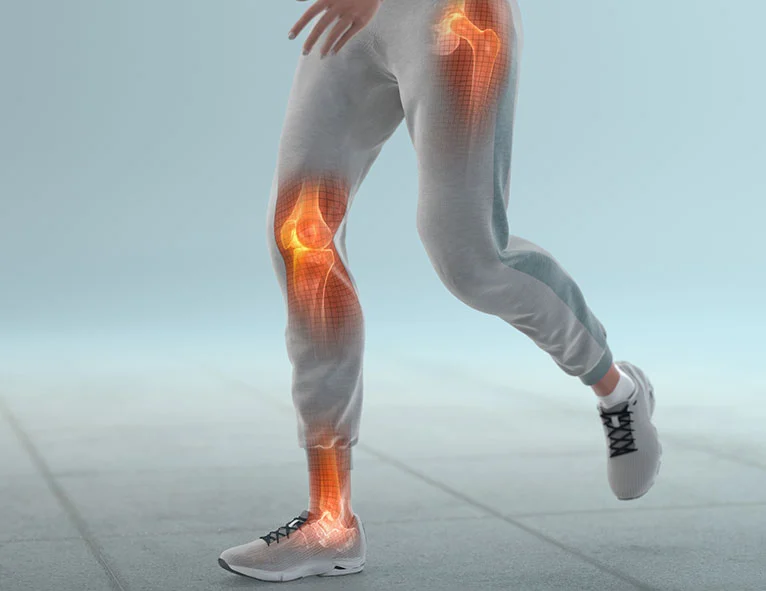
While ensuring that each heel strike is balanced and cushioned, the Alznner’s heel cup can reduce fatigue on the ankles, knees, hips, and back. A properly supported heel can properly distribute the weight of the body through the legs during gait, which means that the tendons of the ankles and knees won’t have to work extra hard to keep the body upright.
Inner And Outer Longitudinal Arch Support
The Alznner also features support for the inner and outer arches of the feet. These are designed to stabilize the foot during gait, to help prevent it rolling inward or outward with each step.
What Does It Do, And How Does It Help?
By supporting all four arches of the foot, the Alznner helps to properly distribute pressure through the entire foot, thereby preventing any one part of the foot from taking on too much pressure. This can help alleviate pain in areas of the foot that are straining under too much stress.
The Alznner’s inner and outer longitudinal arches stabilize the foot during gait, helping to prevent pronation and supination (rolling inward or outward). By stabilizing the foot, the Alznner helps to promote proper gait, thereby reducing excess stress in the ankles, knees and hips.
As part of a complete Good Feet Arch Support System, the Alznner is ideal for:
- Walking
- Weightlifting
- Working (boots, shoes, etc.)
- Standing all day
- Non-running exercise