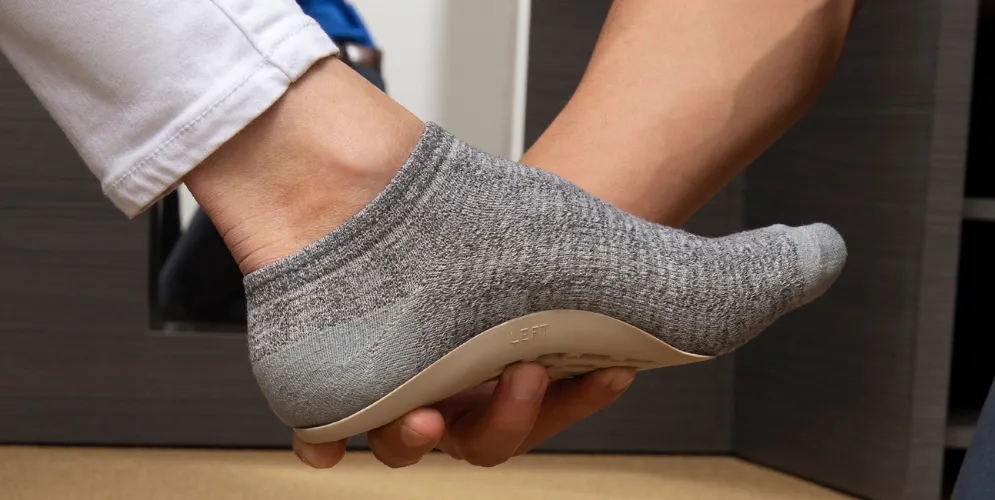
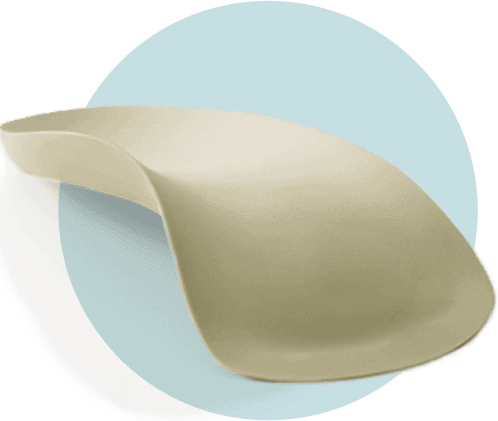
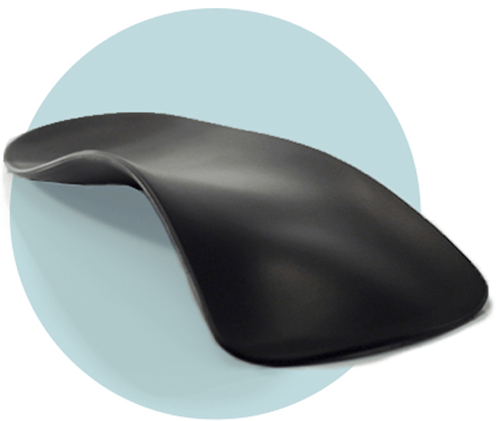
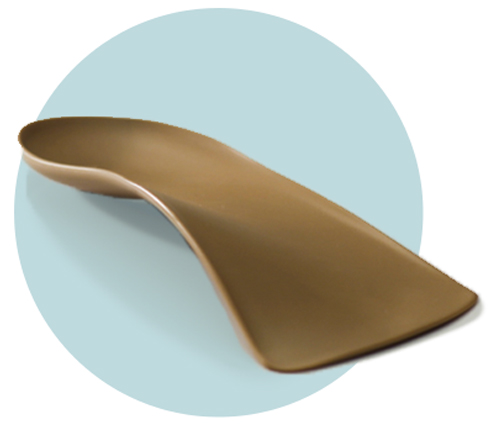
Flexibility : Rigid The Max arch support is the most rigid arch support in the Exerciser family. It is built to work as hard as you do on hard surfaces or in heavy shoes. The Max’s rigid compound prevents it from flexing very much during gait. This support can stand up to even the most severe biomechanical imbalances, extremely high arches or feet that are unstable during gait.
The Max arch support is the firmest arch support in the Exerciser family. It is formed in the same mold as the Classic arch support, but is made of an extremely durable polypropylene compound. The Max arch support is ideal for those with very high arches, very flexible arches or those who work on very hard surfaces day in and day out. Its durable construction means it takes a little getting used to but customers with high arches or those who are in dire need of aggressive arch support have found the Max arch support suitable for their pain relief needs.
+What's in a Max?
(HOVER OVER THE LINKS ABOVE TO LEARN MORE ABOUT THE FEATURES OF THE MAX ARCH SUPPORT)
STABILITY WEB
The sole of the Max arch support features a sturdy pattern of connected squares called a “Stability Structure.” These thick squares are positioned under the forefoot of the support, to help stabilize the foot during gait.
What Does the Stability Structure Do and How Can it Help?
The Max’s square Stability Structure helps to prevent unnecessary side-to-side motion of the foot during gait. The Max arch support’s stable sole pattern helps the Max retain its arched shape no matter how hard the foot depresses it, ensuring that the many bones of the forefoot are properly supported. This can lead to a more stabilized, better aligned foot.
Top
Heel Cup
The heel cup is a cup-like indentation at the heel end of the Max arch support. It is designed to protect the fatty pad of the heel and to help absorb the “step shock” and joint impact that courses through the body each time the heel strikes the ground.
What Does the Heel Cup Do and How Can it Help?
Every step each foot takes begins when the heel makes contact with the ground, in what is called “heel strike.” When the heel strikes the ground, up to three times the body’s weight can be exerted on the bones and tissues of the heel. This puts the heel under tons of stress, especially if it is not properly supported. The Max arch support’s heel cup is designed to help cushion and properly align the heel, thereby reducing the stress of each step.
A stable heel is one of the foundations of a stable body. If a heel is striking the ground at an angle, or rolling too much to one side during gait, it can cause imbalances throughout the entire foot, ankle, knees, and eventually through the entire body. By supporting the heel, the Max arch support can help align each step starting with the heel strike.
While ensuring that each heel strike is balanced and cushioned, the Max’s heel cup can help to reduce fatigue on the ankles, knees, hips, and back. A properly supported heel can properly distribute the weight of the body through the legs during gait, which means that the tendons of the ankles and knees won’t have to work extra hard to keep the body upright. As part of an arch support system, the Max’s heel cup can be the first step toward an ideally aligned skeleton.
Top
Inner And Outer Longitudinal Arch Support
The Max arch support also features support for the inner and outer arches of the feet. These are designed to stabilize the foot during gait, to help prevent it rolling inward or outward with each step.
What Does Inner and Outer Longitudinal Arch Support Do and How Does it Help?
By supporting all four arches of the foot, the Max arch support helps to properly distribute pressure through the entire foot, thereby preventing any one part of the foot from taking on too much pressure. This can help alleviate pain in areas of the foot that are strained.
The Max’s inner and outer longitudinal arches stabilize the foot during gait helping to prevent pronation and supination (rolling inward or outward). Because it is so rigid, the Max allows virtually no unnecessary supination or pronation which can drastically reduce pain due to excessive rolling of the foot during gait.
Top